
 2 weeks ago
19
2 weeks ago
19
So your little sausage dog is growing up and you’re not sure if they’re hitting the right milestones. Good news: you’ve landed in the right place. This guide breaks down dachshund weight by age for both standard and miniature varieties, male and female, with charts you can actually use at home.
Dachshunds are one of the most unique breeds in the world. They’ve got that iconic long spine and short legs, which makes tracking their growth a bit more involved than it is for other dogs. Getting their weight right isn’t just about aesthetics. It directly affects their back health, joint stress, and how long they live comfortably. We’ll cover all of that below.
Standard vs. Miniature: What’s the Difference?
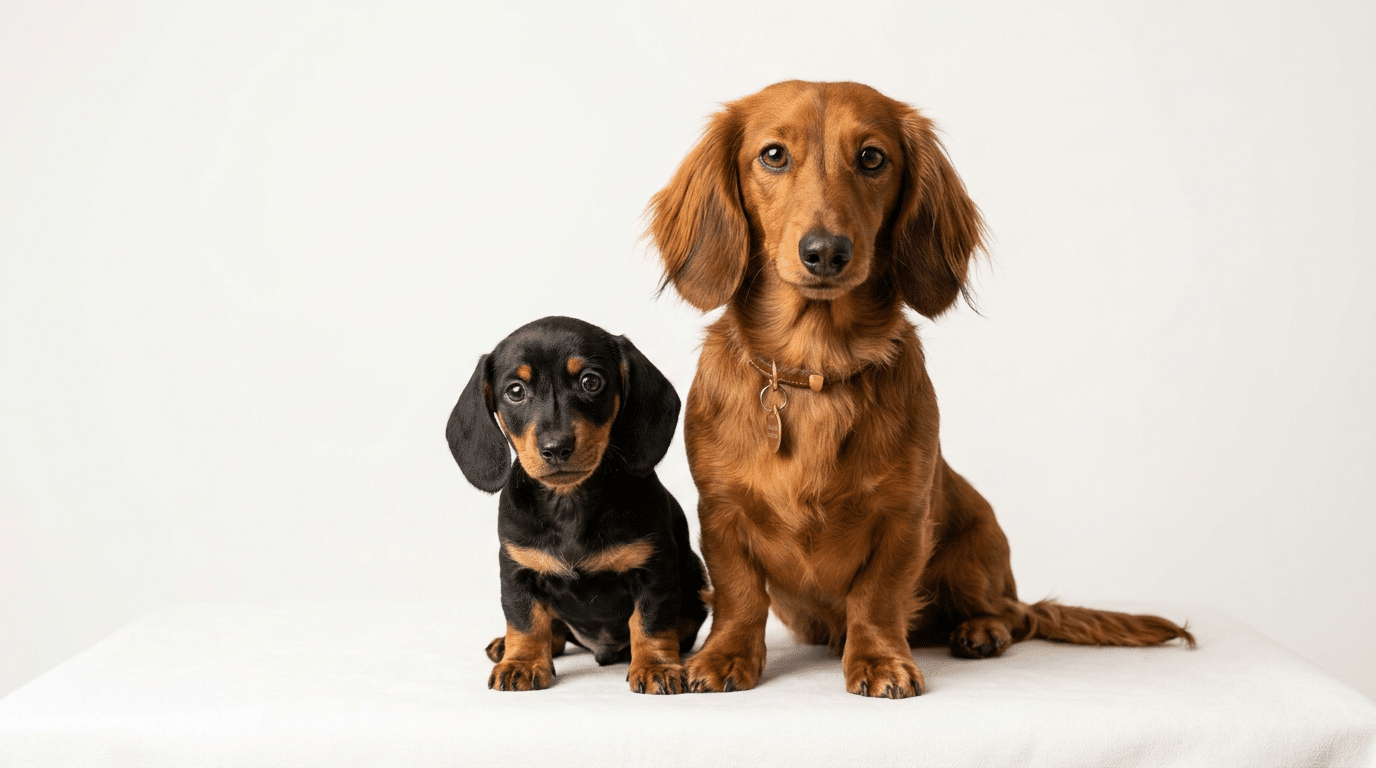
Before you look at any chart, you need to know which type of dachshund you have. The AKC recognizes two sizes:
- Standard Dachshunds typically weigh between 16 and 32 pounds at full adult size
- Miniature Dachshunds max out at 11 pounds, with most healthy minis landing between 8 and 11 pounds
Some breeders also sell “tweenie” dachshunds that fall between 11 and 16 pounds. These aren’t officially recognized by the AKC as a separate classification, but you’ll see the term used a lot. If your dog lands in that middle zone, compare them against both charts to get a clearer picture.
The two varieties also grow at slightly different paces. Miniature dachshunds reach their adult weight faster, usually by around 10-12 months. Standard dachshunds continue filling out until they’re about 18 months old.
Standard Dachshund Weight by Age: Male
Here’s what typical growth looks like for a male standard dachshund from birth through adulthood. These are average ranges based on AKC breed standards and veterinary growth data. Your dog can fall a bit above or below without concern, as long as they’re consistently growing and not skipping growth stages.
| 8 weeks (2 months) | 3–5 lbs | 1.4–2.3 kg |
| 3 months | 5–8 lbs | 2.3–3.6 kg |
| 4 months | 7–11 lbs | 3.2–5.0 kg |
| 5 months | 9–14 lbs | 4.1–6.4 kg |
| 6 months | 11–17 lbs | 5.0–7.7 kg |
| 8 months | 14–22 lbs | 6.4–10.0 kg |
| 10 months | 16–27 lbs | 7.3–12.2 kg |
| 12 months | 17–30 lbs | 7.7–13.6 kg |
| 18 months (adult) | 18–32 lbs | 8.2–14.5 kg |
Standard Dachshund Weight by Age: Female
Female standard dachshunds run slightly lighter than males on average, but the difference isn’t dramatic. A few pounds at most across all age stages.
| 8 weeks (2 months) | 2.5–4.5 lbs | 1.1–2.0 kg |
| 3 months | 4–7 lbs | 1.8–3.2 kg |
| 4 months | 6–10 lbs | 2.7–4.5 kg |
| 5 months | 8–13 lbs | 3.6–5.9 kg |
| 6 months | 10–15 lbs | 4.5–6.8 kg |
| 8 months | 13–20 lbs | 5.9–9.1 kg |
| 10 months | 15–24 lbs | 6.8–10.9 kg |
| 12 months | 16–27 lbs | 7.3–12.2 kg |
| 18 months (adult) | 16–30 lbs | 7.3–13.6 kg |
Miniature Dachshund Weight by Age: Male
Miniature dachshunds grow fast. Most of their growth happens in the first 6 months, with slower gains through the end of year one. After 12 months, you’re basically looking at their adult weight.
| 8 weeks (2 months) | 1.5–2.5 lbs | 0.7–1.1 kg |
| 3 months | 2.5–4 lbs | 1.1–1.8 kg |
| 4 months | 3.5–5.5 lbs | 1.6–2.5 kg |
| 5 months | 4.5–7 lbs | 2.0–3.2 kg |
| 6 months | 5.5–8.5 lbs | 2.5–3.9 kg |
| 8 months | 6.5–10 lbs | 2.9–4.5 kg |
| 10 months | 7–10.5 lbs | 3.2–4.8 kg |
| 12 months (adult) | 7.5–11 lbs | 3.4–5.0 kg |
Miniature Dachshund Weight by Age: Female
| 8 weeks (2 months) | 1.2–2 lbs | 0.5–0.9 kg |
| 3 months | 2–3.5 lbs | 0.9–1.6 kg |
| 4 months | 3–5 lbs | 1.4–2.3 kg |
| 5 months | 4–6.5 lbs | 1.8–2.9 kg |
| 6 months | 5–8 lbs | 2.3–3.6 kg |
| 8 months | 5.5–9 lbs | 2.5–4.1 kg |
| 10 months | 6–10 lbs | 2.7–4.5 kg |
| 12 months (adult) | 6.5–11 lbs | 2.9–5.0 kg |
Dachshund Height Chart by Age
Weight gets all the attention, but height matters too. Dachshunds are measured at the withers (top of the shoulder blades). Here’s what to expect for both varieties.
| Standard Dachshund | 8–9 inches (20–23 cm) |
| Miniature Dachshund | 5–6 inches (13–15 cm) |
Most dachshunds hit their full height by 10-12 months, even if they’re still filling out weight-wise. A standard dachshund that stops growing taller at 8 months but keeps gaining weight until 18 months is completely normal. It’s a two-phase process.
Dachshund Growth Stages Explained
Understanding how dachshunds grow helps you know what to expect and when to worry. Here’s the breakdown by phase:
Newborn to 8 Weeks
Puppies are entirely dependent on mom. Weight doubles and triples rapidly during this period. You won’t be buying a dachshund puppy during this phase, but reputable breeders track weights to make sure all pups are thriving equally.
8 Weeks to 4 Months
This is when most people bring their puppy home. Growth is fast right now. Your puppy might seem like they’re eating constantly and still losing weight some days. That’s normal. They’re burning a lot of calories just growing and playing. Feed a quality puppy food formulated for small breeds. Check out our guide to the best dachshund puppy foods to find the right option for this stage.
4 to 8 Months
Growth slows a bit but still moves fast. By 6 months, most miniature dachshunds are already close to their adult size. Standard dachshunds are about halfway there. This is also when some puppies start to look a bit awkward – their body is lengthening before their weight catches up. Don’t mistake that for being underweight.
8 to 12 Months
Miniature dachshunds are basically done growing. Standard dachshunds are reaching their full height but still adding muscle and some weight. If you haven’t already, transition to adult dog food around the 12-month mark.
12 to 18 Months
Standard dachshunds continue to fill out during this window. Their chest broadens slightly and they gain a bit more body mass. Miniatures are fully adult by now. Overfeeding during this phase is one of the most common ways dachshunds end up overweight.
Quick Reference: Adult Dachshund Weight Targets
- Standard Male: 18–32 lbs | fully grown at 18 months
- Standard Female: 16–30 lbs | fully grown at 18 months
- Miniature Male: 7.5–11 lbs | fully grown at 12 months
- Miniature Female: 6.5–11 lbs | fully grown at 12 months
- Tweenie (unofficial): 11–16 lbs
How Much Should a Dachshund Eat by Age?
Feeding amounts depend on the food you’re using, your dog’s weight, and activity level. Here are general guidelines using a standard dry kibble with around 350-400 calories per cup. Always check the specific feeding chart on your food bag first.
| 8 weeks – 3 months (mini) | 1/4 – 1/3 cup | 3–4 meals |
| 8 weeks – 3 months (standard) | 1/3 – 1/2 cup | 3–4 meals |
| 3–6 months (mini) | 1/3 – 1/2 cup | 3 meals |
| 3–6 months (standard) | 1/2 – 3/4 cup | 3 meals |
| 6–12 months (mini) | 1/3 – 1/2 cup | 2–3 meals |
| 6–12 months (standard) | 3/4 – 1 cup | 2–3 meals |
| Adult (mini, 8–11 lbs) | 1/4 – 3/8 cup | 2 meals |
| Adult (standard, 16–32 lbs) | 1/2 – 1 cup | 2 meals |
These are starting points, not hard rules. If your dachshund looks lean with visible ribs, add a little more. If you can’t feel their ribs easily, cut back. The body condition score check (described below) is a better tool than the scale alone.
For in-depth nutrition guidance, read the complete dachshund feeding guide we put together. It covers calorie needs, ingredients to avoid, and how to transition between life stages.
Is My Dachshund at a Healthy Weight?
The scale tells one part of the story. The other part comes from what you feel and see.
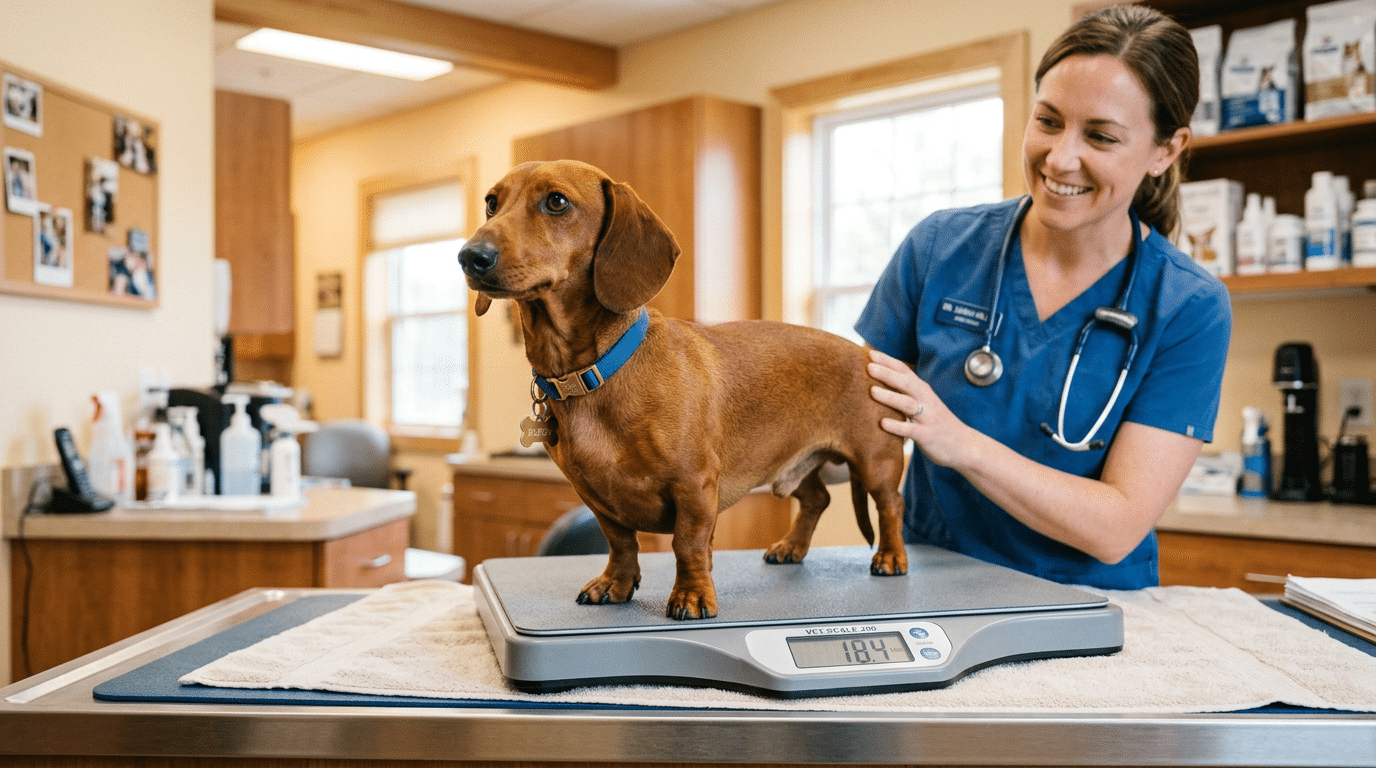
Vets use a Body Condition Score (BCS) on a scale from 1 to 9. A score of 4 or 5 is ideal. Here’s how to do a quick at-home check:
- Ribs: Run your fingers along the side of your dog’s chest. You should feel the ribs without pressing hard. If you can see the ribs clearly, they’re underweight. If you can’t feel them at all, they’re overweight.
- Waist: Look at your dog from above. You should see a slight waist tuck behind the rib cage. A straight barrel shape means excess weight.
- Belly tuck: From the side, the belly should rise slightly from the chest toward the hind legs. A sagging belly line is a sign of too much weight.
For dachshunds specifically, you can’t rely on visual cues as much as you can for other breeds. Their long body hides weight gain well. The rib check is your most reliable tool.
Body Condition Score Quick Check
- Too thin (BCS 1–3): Ribs visible, no fat cover, bony hip bones
- Ideal (BCS 4–5): Ribs felt easily, waist visible from above, slight belly tuck
- Overweight (BCS 6–7): Ribs felt with pressure, waist barely visible, fat deposits
- Obese (BCS 8–9): Ribs not palpable, no waist, belly droops, limited mobility
IVDD Risk: Why Weight Matters More for Dachshunds Than Almost Any Other Breed
Here’s the part most growth chart articles skip. For dachshunds, weight management isn’t just about looking good at the dog park. It’s about protecting their spine.
Dachshunds are bred with chondrodystrophy, a genetic condition that gives them their characteristic short legs and long spine. This same trait makes them highly prone to Intervertebral Disc Disease (IVDD). Up to 25% of dachshunds will develop some form of IVDD in their lifetime, and the risks are much higher in overweight dogs.
The discs between the vertebrae of a dachshund’s spine calcify earlier and more severely than in other breeds. Excess body weight adds direct mechanical pressure on those already-stressed discs. A dachshund carrying even 2 extra pounds puts significantly more stress on their back than a dog at their ideal weight.
Signs of IVDD to watch for:
- Reluctance to jump up or climb stairs
- Crying or yelping when picked up or touched on the back
- Hunched back posture
- Wobbling or dragging hind legs
- Sudden hind-end weakness
If you see any of these signs, see your vet immediately. IVDD can progress quickly. Early treatment gives the best outcome.
For dogs dealing with joint issues and inflammation, some owners have found success with supplements. You can read about BPC-157 for dog joint pain and arthritis as one option vets are exploring for back and joint health support.
Prevention is straightforward: keep your dachshund lean, avoid high jumps, and use ramps instead of letting them jump on and off furniture.
Why Is My Dachshund Not Gaining Weight?
If your dachshund is consistently underweight for their age group, a few things could be happening:
- Parasites: Intestinal worms are a common cause of poor weight gain in puppies. A fecal test at the vet will catch this fast.
- Wrong food: Not all dog foods are equal. Low-quality kibble with poor nutrient density won’t fuel proper growth. Check out the best dog foods for dachshunds with no fillers for a quality upgrade.
- Illness: Digestive disorders, thyroid issues, and dental pain can all cause weight loss or failure to gain. If your puppy seems healthy but just isn’t growing, get a vet checkup.
- Underfeeding: It sounds obvious, but a lot of first-time owners underestimate how much a growing puppy needs. Double-check your feeding amounts.
Why Is My Dachshund Overweight?
This is far more common than underweight. Dachshunds are food-motivated, love to lay around, and are small enough that owners often don’t realize how much weight they’ve gained until it becomes obvious.
The most common culprits:
- Too many treats: Treats should make up no more than 10% of daily calories. That’s only about 30-50 extra calories for most dachshunds. One dog biscuit can eat up most of that budget.
- Table scraps: Human food is calorie-dense compared to dog food portions. Even small amounts add up fast on a 10-pound dog.
- Inactivity: Dachshunds need 30-45 minutes of daily exercise. Short walks count. Most owners under-exercise their dogs significantly.
- Neutering effects: Spayed and neutered dogs have lower metabolic rates. You may need to reduce portions by 10-20% after the procedure.
If your dachshund is currently overweight, talk to your vet about a calorie-controlled plan. Don’t put them on a crash diet. Gradual weight loss of around 1-2% of body weight per week is safe and sustainable.
A freeze-dried food for dachshunds can be a good choice for weight management since it’s typically more nutrient-dense with fewer fillers than standard kibble.
Frequently Asked Questions
At what age is a dachshund fully grown?
Miniature dachshunds are fully grown by around 12 months. Standard dachshunds take a bit longer, usually reaching their full adult weight and build by 18 months. Both varieties stop growing taller earlier, around 10-12 months.
What is a healthy weight for a miniature dachshund?
The AKC considers miniature dachshunds to be those weighing 11 pounds or less. A healthy adult miniature dachshund typically weighs between 7 and 11 pounds. Dogs that fall between 11 and 16 pounds are sometimes called “tweenies” by breeders.
What is a healthy weight for a standard dachshund?
Standard dachshunds typically weigh between 16 and 32 pounds at adulthood. Males tend to be slightly heavier than females within that range.
How can I tell if my dachshund is overweight?
The best method is the rib check. Run your fingers along your dog’s ribcage. You should be able to feel individual ribs without pressing hard. If you can’t feel them easily, or if there’s a visible fat pad over their back, they’re likely carrying too much weight. Ask your vet to do a formal Body Condition Score assessment at the next checkup.
Does weight affect IVDD in dachshunds?
Yes, significantly. Excess body weight puts additional mechanical stress on the spinal discs, which are already prone to early degeneration in dachshunds. Keeping your dachshund at their ideal weight is one of the most effective things you can do to reduce their IVDD risk.
When should I switch my dachshund from puppy food to adult food?
For miniature dachshunds, switch to adult food around 12 months. For standard dachshunds, 12-18 months is the typical window. There’s no hard rule, but puppy food has more calories and protein than an adult dog needs once they’ve stopped growing. Transitioning too late can contribute to weight gain.
My dachshund is smaller than the charts show. Should I worry?
Not necessarily. These charts show average ranges and your individual dog may fall below them for perfectly normal reasons. If your puppy is consistently gaining weight, has good energy, eats well, and your vet says they’re healthy, a smaller size isn’t a problem. Always raise concerns at your next vet visit if you’re unsure.
Want to learn more about your dachshund? Check out our guide to dachshund colors and AKC coat patterns or browse 75+ funny dachshund names if you’re still picking the perfect name for your pup.
The Bottom Line
Dachshund weight by age isn’t just a number to hit on a chart. It’s one of the most important health metrics for this breed. A lean dachshund is a healthier dachshund, full stop. Their long spines can’t afford the extra load that even a few extra pounds brings.
Use the charts above as a starting point, but rely on your vet and the body condition score check as your ongoing guide. If your dachshund falls outside the ranges shown here, that’s not automatically a problem. Watch the trend over time. A dog that’s consistently gaining at a healthy rate and showing good energy is on the right track.







 English (US) ·