
 2 weeks ago
19
2 weeks ago
19
If you’ve got a Golden Retriever puppy at home, you’ve probably already checked their weight three times this week. That’s completely normal. These dogs grow fast, and knowing whether your pup is on track feels reassuring when you’re still figuring everything out.
This guide covers golden retriever weight by age for both males and females, from newborn through adulthood. You’ll also find height charts, growth stages, feeding amounts, and tips for keeping your dog at a healthy weight. Bookmark it — you’ll use it a lot in year one.
One important note before we get into the numbers: the ranges here are averages. Genetics, diet, and individual build all affect where your dog lands. A Golden at the high end of the range isn’t automatically overweight, and one at the low end isn’t automatically underweight. Your vet is the best resource for evaluating your specific dog.
Adult Golden Retriever Size at a Glance
- Adult male weight: 65-75 lbs (29-34 kg) — AKC standard
- Adult female weight: 55-65 lbs (25-29 kg)
- Adult male height: 23-24 inches at the shoulder
- Adult female height: 21.5-22.5 inches at the shoulder
- Full adult size reached: 12-18 months for height; muscle fills in by 24 months
- Classification: Large breed dog
- Growth plate closure: Typically 12-18 months of age
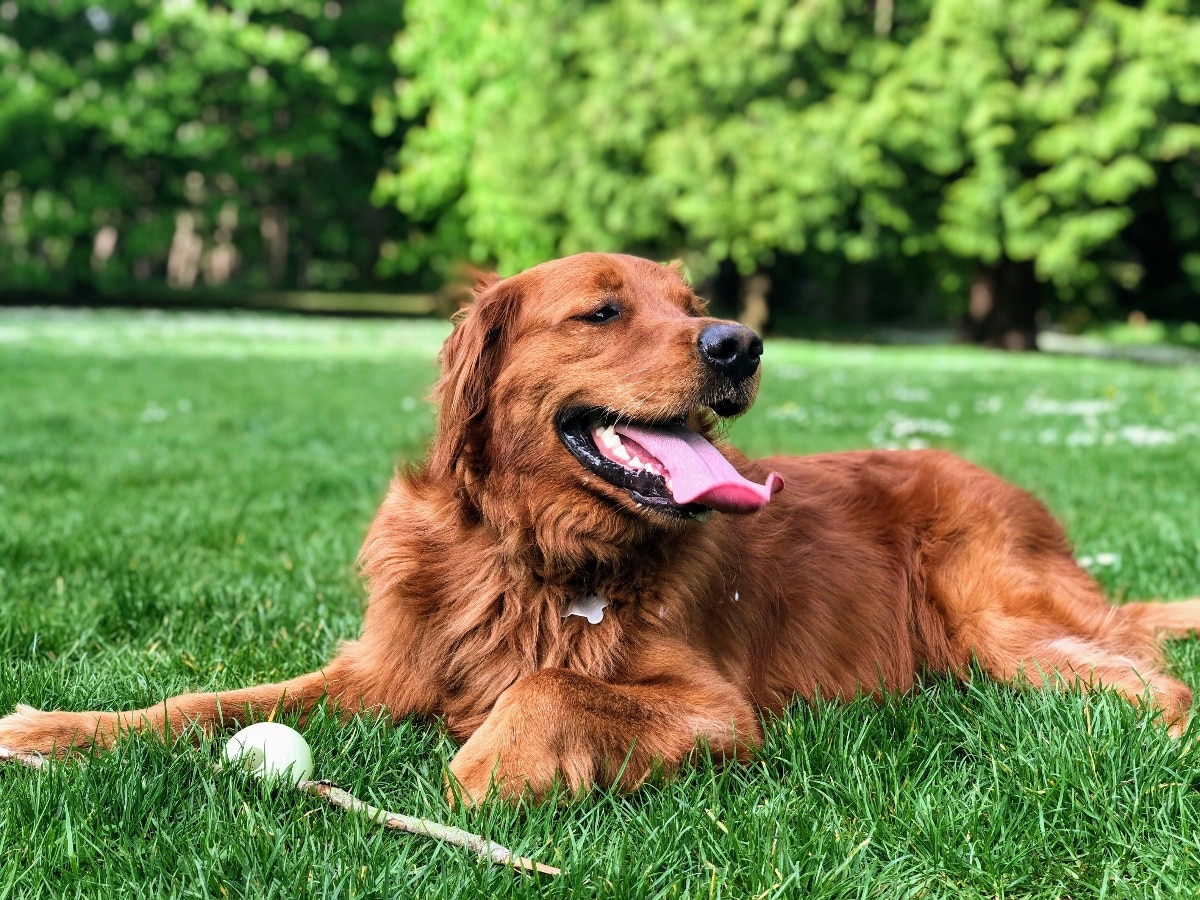
Male Golden Retriever Weight by Age
Male Goldens tend to be larger than females throughout every stage of growth. They hit their adult height around 9-12 months but keep adding weight and muscle through 18-24 months. Some males look noticeably more “filled out” at their second birthday than they did at their first.
The following chart shows average weights and heights for male Golden Retrievers from newborn to 3 years. These are averages — consult your vet if you have concerns about your dog’s growth rate.
| Newborn | 0.5 – 1.0 | 0.2 – 0.45 | 3 – 4 | 7.6 – 10.2 |
| 1 month | 5 – 10 | 2.3 – 4.5 | 6 – 9 | 15.2 – 22.9 |
| 2 months | 10 – 20 | 4.5 – 9 | 9 – 11 | 22.9 – 28 |
| 3 months | 20 – 30 | 9 – 13.6 | 11 – 14 | 28 – 35.6 |
| 4 months | 30 – 40 | 13.6 – 18 | 14 – 17 | 35.6 – 43.2 |
| 5 months | 40 – 50 | 18 – 22.7 | 17 – 20 | 43.2 – 50.8 |
| 6 months | 50 – 60 | 22.7 – 27.2 | 20 – 22 | 50.8 – 56 |
| 7 months | 55 – 65 | 25 – 29.5 | 21 – 23 | 53.3 – 58.4 |
| 8 months | 60 – 70 | 27.2 – 31.8 | 22 – 24 | 56 – 61 |
| 9 months | 65 – 75 | 29.5 – 34 | 23 – 25 | 58.4 – 63.5 |
| 10 months | 65 – 75 | 29.5 – 34 | 23 – 25.5 | 58.4 – 64.8 |
| 11 months | 70 – 80 | 31.8 – 36.3 | 24 – 26 | 61 – 66 |
| 12 months | 70 – 85 | 31.8 – 38.6 | 24 – 26.5 | 61 – 67.3 |
| 2 years | 75 – 90 | 34 – 40.8 | 25 – 27 | 63.5 – 68.6 |
| 3 years | 75 – 95 | 34 – 43.1 | 25 – 27.5 | 63.5 – 69.9 |
Female Golden Retriever Weight by Age
Female Goldens are generally 5-10 lbs lighter and 1-2 inches shorter than males at every age. They often reach their full size a bit earlier too. That said, a larger female isn’t unusual — some females from bigger bloodlines land closer to the male range.
Here’s the breakdown for females, newborn through 3 years:
| Newborn | 0.5 – 0.9 | 0.2 – 0.4 | 3 – 4 | 7.6 – 10.2 |
| 1 month | 4.5 – 9 | 2 – 4.1 | 5.5 – 8 | 14 – 20.3 |
| 2 months | 8 – 18 | 3.6 – 8.2 | 8 – 10 | 20.3 – 25.4 |
| 3 months | 18 – 27 | 8.2 – 12.3 | 10 – 13 | 25.4 – 33 |
| 4 months | 27 – 37 | 12.3 – 16.8 | 13 – 16 | 33 – 40.6 |
| 5 months | 35 – 47 | 15.9 – 21.3 | 15.5 – 19 | 39.4 – 48.3 |
| 6 months | 40 – 55 | 18.1 – 25 | 17 – 21 | 43.2 – 53.3 |
| 7 months | 45 – 60 | 20.4 – 27.2 | 18 – 22 | 45.7 – 55.9 |
| 8 months | 50 – 65 | 22.7 – 29.5 | 19 – 23 | 48.3 – 58.4 |
| 9 months | 55 – 70 | 25 – 31.8 | 20 – 24 | 50.8 – 61 |
| 10 months | 55 – 72 | 25 – 32.7 | 20 – 24.5 | 50.8 – 62.2 |
| 11 months | 58 – 75 | 26.3 – 34 | 21 – 25 | 53.3 – 63.5 |
| 12 months | 60 – 80 | 27.2 – 36.3 | 21.5 – 25.5 | 54.6 – 64.8 |
| 2 years | 65 – 85 | 29.5 – 38.6 | 22.5 – 26 | 57.2 – 66 |
| 3 years | 65 – 90 | 29.5 – 40.8 | 23 – 26.5 | 58.4 – 67.3 |
These figures represent averages. Individual dogs may fall outside these ranges and still be completely healthy. Always check with your vet if you have concerns about your Golden’s growth trajectory.
Golden Retriever Growth Stages Explained
Growth doesn’t happen evenly. There are distinct phases your Golden will pass through, and each one comes with different needs and challenges.
Newborn to 3 Weeks
Puppies are born with their eyes and ears closed. They rely entirely on their mother for warmth and nutrition. Weight roughly doubles in the first week. Your job at this stage is mostly making sure the whole litter is nursing and gaining steadily.
3 Weeks to 2 Months
This is when things get fun. Eyes open around 2-3 weeks. By 8 weeks, puppies are showing real personality and starting to interact with the world. They’re being weaned off mom’s milk and transitioning to puppy food. Most Golden puppies leave for their new homes around 8 weeks old, typically weighing 8-20 lbs.
2 to 6 Months: The Fast Phase
This is the rapid growth window. Your puppy can nearly double in size month over month. A 10 lb puppy at 8 weeks may be 50 lbs by 5-6 months. Their bones are growing fast, which means joints are vulnerable. Keep high-impact exercise to a minimum — no long runs, no repetitive jumping, no rough stairs.
This is also when diet matters most. Switch to a quality Golden Retriever puppy food formulated for large breeds. Large breed puppy formulas have adjusted calcium-to-phosphorus ratios that support steady bone development without pushing growth too fast — which can cause problems later.
6 to 12 Months: The Teenage Phase
Growth slows down, but your Golden may still look lanky and act a bit wild. Welcome to adolescence. They might test limits and seem to forget commands they’ve already mastered. Stick with training — it passes. This is also a good time to start adding joint-supporting supplements for Golden Retriever puppies to help protect developing hips and elbows.
12 to 24 Months: Filling Out
Your Golden has reached most of their adult height by 12 months. But they’re not done. The next year is about muscle development, chest width, and overall body condition. Males especially will look noticeably more solid at 18 months than at their first birthday. Weight can increase 5-10 lbs during this window, which is normal.
How Much Should a Golden Retriever Eat by Age?
Feeding the right amount directly affects whether your dog reaches and stays at a healthy weight. Too much food early on can push rapid weight gain that strains developing joints — a real concern for a breed already prone to hip issues. Too little means slow growth and nutritional gaps.
Here’s a general guide based on age and typical daily caloric needs for this breed:
Golden Retriever Daily Feeding Guide
| 2-3 months | 3-4 meals | 1.5 – 2 cups | Large breed puppy formula only |
| 3-6 months | 3 meals | 2 – 2.5 cups | Monitor weight weekly |
| 6-12 months | 2-3 meals | 2.5 – 3.5 cups | Transition to 2x/day around 6 months |
| 1-2 years | 2 meals | 3 – 4 cups | Adjust based on activity level |
| 2+ years (adult) | 2 meals | 2.5 – 3.5 cups | Check your brand’s guidelines by weight |
These are estimates based on a standard dry kibble. Always follow your specific food brand’s guidelines and adjust based on your dog’s body condition. Active dogs may need more; less active or older dogs typically need less.
Not sure which food to use at each stage? See this guide to the best dog foods for Golden Retrievers, which covers puppy through senior options.
What’s a Healthy Weight for a Golden Retriever?
The weight ranges in the charts above cover a wide spectrum. A male Golden at 80 lbs and one at 95 lbs can both be perfectly healthy — it depends on their frame and muscle mass. So what actually tells you whether your dog is at the right weight?
Use the rib test. Run your hand along your dog’s side. You should be able to feel the ribs without pressing hard, but they shouldn’t be visibly sticking out. That’s a good weight. Can’t feel the ribs at all? That’s a sign of extra body fat. Ribs are very prominent? Your dog might be underweight.
Also check from above. A healthy Golden should have a visible waist behind the rib cage when you look down. No waist at all is a red flag.
Goldens are notorious for acting hungry even when they’ve just finished a full meal. Don’t let those eyes fool you. Obesity is one of the leading health problems in this breed, and extra weight puts real stress on their joints — especially their hips. Studies have found that overweight Goldens are significantly more likely to develop joint disease earlier in life.
Getting the right nutrition early on, including targeted supplements for Golden Retriever puppies, can go a long way toward protecting those joints.
When Do Golden Retrievers Stop Growing?
Most Goldens reach their adult height between 9 and 12 months. But overall development takes longer. Weight and muscle mass keep building through 18-24 months. Some males won’t be fully “filled out” until they’re closer to 2 years old.
So while your 1-year-old Golden may look like an adult, their body is still maturing. Don’t be surprised if they look noticeably more solid at 2 years than they did at 12 months — that’s normal and expected.
Their behavior also lags behind their physical size. Golden Retrievers often act like puppies well into their second and third year. Consistent training helps tremendously. Check out some of the best online dog training courses for Golden Retrievers if you’re dealing with a dog that’s grown fast but still acts like a puppy.
Does Spaying or Neutering Affect Growth?
Yes, and it’s worth knowing about before you schedule that surgery. Dogs spayed or neutered before their growth plates close — typically before 12-18 months for Goldens — may grow slightly taller than they would have otherwise. Sex hormones normally signal the growth plates to stop, so without them, bones keep lengthening a bit longer.
Research specific to Golden Retrievers has found links between early spay/neuter and higher rates of certain joint conditions, including hip dysplasia and cranial cruciate ligament tears. Many vets now recommend waiting until 12-18 months for this breed. Have that conversation with your vet before making the decision.
Golden Retriever Coat Development
Golden Retriever puppies are born with short, soft fur. The famous flowing adult coat doesn’t come in until around 4-6 months, when you’ll start seeing longer hair form around the ears, chest, and tail. The full double coat — with its dense undercoat and longer outer layer — is usually complete by 12-18 months.
Heavy shedding starts when the adult coat arrives. That’s just life with a Golden. A quality diet helps keep the coat healthy and shedding somewhat manageable. For older dogs, targeted support makes a real difference — check out the best supplements for senior Golden Retrievers to support both coat health and joint function as they age.
As your Golden reaches their adult size, having the right gear matters too. A bed that actually fits a 70-80 lb dog makes a big difference in sleep quality and joint health. See the best dog beds for Golden Retrievers if you’re still using the puppy bed from year one.
And if your Golden deals with anxiety — separation anxiety is common in this breed — there are proven ways to calm Golden Retriever anxiety without relying on medication in most cases.
Frequently Asked Questions about Golden Retriever Weight and Growth
What is the average golden retriever weight by age?
Male Goldens typically weigh 5-10 lbs at 1 month, 20-30 lbs at 3 months, 50-60 lbs at 6 months, and 70-85 lbs at 12 months. Females run a bit lighter: 4.5-9 lbs at 1 month, 18-27 lbs at 3 months, 40-55 lbs at 6 months, and 60-80 lbs at 12 months. Most reach full adult weight by 18-24 months.
How big do Golden Retrievers get?
Adult males typically weigh 65-75 lbs and stand 23-24 inches at the shoulder. Females typically weigh 55-65 lbs and stand 21.5-22.5 inches. Some dogs fall outside these ranges and are still completely healthy — it depends on their individual build and genetics.
When do Golden Retrievers stop growing?
Most Goldens reach their adult height by 9-12 months, but keep adding muscle and weight through 18-24 months. Males especially may look noticeably more filled out at 2 years than at their first birthday.
How much should I feed my Golden Retriever puppy?
At 2-3 months: 1.5-2 cups per day in 3-4 meals. At 3-6 months: 2-2.5 cups in 3 meals. At 6-12 months: 2.5-3.5 cups in 2-3 meals. Always follow the specific guidelines on your food packaging and adjust based on your puppy’s weight gain. Large breed puppy formulas are best during this growth stage.
Is my Golden Retriever overweight?
Run your hands along their sides. You should be able to feel the ribs without pressing hard, but they shouldn’t be visibly sticking out. From above, there should be a visible waist behind the rib cage. If you can’t feel ribs or see a waist, your dog may be carrying extra weight. Your vet can confirm with a body condition score at any wellness visit.
Does spaying or neutering affect a Golden Retriever’s growth?
Yes. Dogs altered before their growth plates close (usually before 12-18 months in Goldens) may grow slightly taller than they would have otherwise. Research specific to this breed has also linked early spay/neuter to higher rates of certain joint conditions. Many vets now recommend waiting until 12-18 months.
How often should I weigh my Golden Retriever puppy?
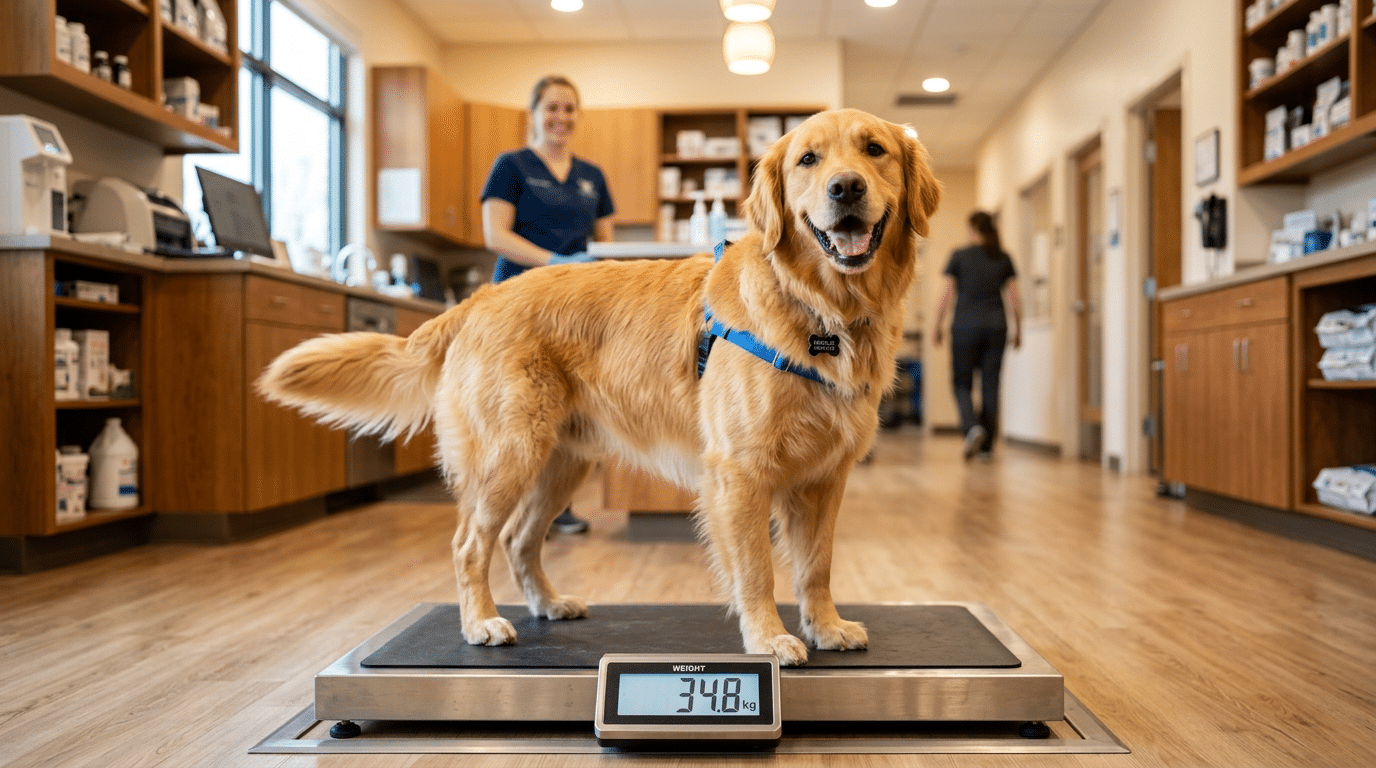
During the rapid growth phase (2-6 months), weighing every 1-2 weeks helps you track progress and catch issues early. After 6 months, monthly weigh-ins are usually enough. Your vet also tracks weight at each vaccination and wellness visit.
What is the difference in weight between male and female Golden Retrievers?
Males are typically 10-15 lbs heavier than females at adult weight. The AKC standard puts males at 65-75 lbs and females at 55-65 lbs. Males are also 1-2 inches taller at the shoulder on average. Both sexes have the same friendly, active temperament — the main difference is physical size.
Do Golden Retrievers have a teenage or adolescent phase?
Yes. Between 6-18 months, Goldens often test limits and seem to forget commands they already knew. This is normal adolescent behavior. Consistent, positive reinforcement training helps them through it. The phase typically passes by 18-24 months.
How can I tell if my Golden Retriever puppy is growing at a healthy rate?
Compare your puppy’s weight to the age-appropriate ranges in the chart above. Your puppy should be gaining weight consistently without sudden jumps or stalls. At wellness visits, your vet will assess their body condition score, which gives a clearer picture than weight alone.

Bottom Line
Golden Retrievers grow fast in year one and keep developing through their second birthday. Tracking your dog’s weight against the charts above gives you a solid baseline — but remember, these are averages. A healthy Golden is one where you can feel the ribs, see a waist from above, and your vet gives the all-clear at annual checkups.
The most common mistakes owners make are overfeeding (often unknowingly), not adjusting food portions as the dog grows, and rushing high-impact exercise before joints are ready. Stick with a quality large breed puppy formula, feed appropriate amounts for your dog’s age, and keep activity moderate through the first year.
As your Golden hits each milestone — first birthday, fully filled out at 2 years, settling into adult life — these charts will help you stay on top of their health. Got a specific question about your pup’s weight? Your vet is the best resource for an assessment tailored to your dog’s individual build.












 English (US) ·