
You’ve done the work. You’ve sat in the living room with a bag of treats, and your dog nailed every “Sit,” “Stay,” and “Down” you threw at them. But the moment you step outside—or a neighbor walks by with a stroller—it’s like they’ve suddenly forgotten their own name. Sound familiar?
It’s a common frustration for modern dog owners. We often assume that once a dog “knows” a command, they should follow it anywhere. Unfortunately, dogs aren’t great at generalizing. To a dog, a “Sit” in the quiet kitchen is a completely different task than a “Sit” at a busy park.
If your dog is only listening when they feel like it, it’s not necessarily that they’re being “stubborn” or “spiteful.” It’s usually a gap in training known as proofing. In this guide, we’ll dive into why your dog’s ears seem to turn off, where the communication is breaking down, and how to get reliable results even when the world is distracting.
Why Your Dog Only Listens “Sometimes”
Reliable obedience isn’t just about intelligence; it’s about competing motivations. In the modern world, your dog is constantly bombarded with sensory input—scents, sounds, and high-speed delivery trucks—that are often more interesting than a piece of kibble.
1. The “Kitchen Champ” Syndrome
Dogs are contextual learners. If 90% of your training happens in your hallway, your dog associates the command with that specific environment. When the scenery changes, the command loses its meaning because they haven’t been taught to filter out “environmental noise.”
2. High Arousal and Over-Stimulation
When a dog’s adrenaline spikes—say, from seeing a squirrel or a delivery driver—their “thinking brain” often shuts down. If they haven’t been trained to handle that level of excitement, they literally cannot process your voice through the physiological “noise” of their own heartbeat.
3. Lack of Consequence (The “Optional” Command)
In many modern “positive-only” approaches, if a dog doesn’t want the treat, they don’t do the trick. If there is no neutral, fair way to follow through when the dog ignores a command, the dog learns that your instructions are actually just suggestions.
4. Poisoned Cues
If you only call your dog to “Come” when it’s time to leave the park or take a bath, the command becomes a negative signal. Eventually, they’ll start weighing the pros and cons of listening to you versus staying in the fun.
Where Training Usually Breaks Down
Consistency isn’t just about doing it every day; it’s about how you do it. Look for these common “leakage” points in your routine.
The Backyard Threshold
The backyard is the “middle ground” of distractions. Many owners skip this step and go straight from the living room to the sidewalk. If your dog can’t listen in the yard with the smell of grass and birds, they’ll never listen on a leash.
Leash Tension and Body Language
Modern owners often rely too much on the leash to “steer” the dog. If you’re pulling back while yelling “Heel,” you’re sending mixed signals. Your dog feels the tension and reacts to it, rather than listening to the verbal cue.
Distance and Duration
Can your dog “Stay” if you’re five feet away? What about fifty? Many dogs fail because we ask for too much, too soon. If the distance increases but the reward or the “follow-through” doesn’t, the dog will eventually break.
How to Proof Commands for the Real World
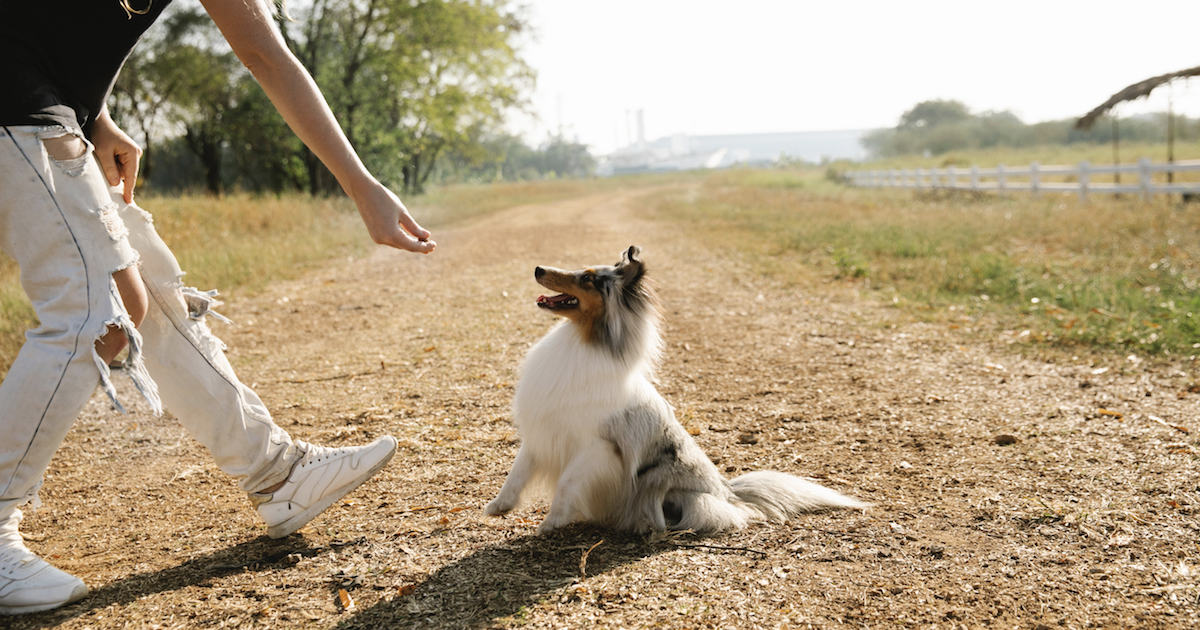
To get a dog that listens the first time, every time, you have to bridge the gap between “training” and “living.”
Step 1: The Three D’s (Distance, Duration, Distraction)
Only change one of these variables at a time. If you’re adding more distraction (like training near a playground), decrease the distance you stand from your dog. Once they’re successful, you can slowly scale back up.
Step 2: Use Real-Life Rewards
A treat is great, but sometimes the “reward” is getting to go sniff a tree or being released to play. Incorporating these into your training makes the commands feel like a key to the world, rather than a barrier to it.
Step 3: Neutralize the Environment
Spend time with your dog in busy places without asking for anything. Let them watch the world go by until they are calm. A calm dog is a teachable dog. If they are frantic just being there, no amount of shouting “SIT” will work
Step 4: The Power of “Release” and Consistency
One of the biggest reasons modern dogs become “selective” is that they don’t actually know when a command ends. If you tell your dog to “Sit,” and they sit for three seconds before wandering off to sniff a bush, they haven’t followed a command—they’ve just paused.
In their mind, they “did the thing,” got the treat (or didn’t), and then made their own choice to leave. This erodes the value of your instructions. To fix this, you must introduce a Terminal Marker—a “Release Word” like “Okay!” or “Free!”
This word tells the dog, “You are done working, and now you can go back to being a dog.” By requiring them to stay in the position until you say otherwise, you build mental endurance. You’re teaching them that the command isn’t over until the human says it is. This simple switch moves the dog from a state of “I’ll do this for a second” to “I’m tuned in until I’m dismissed.”
Step 5: Stop Repeating Yourself (The “One-Command” Rule)
We’ve all been there: “Sit… Sit… Fido, Sit… SIT!” By the fourth time you say it, your dog has learned that the first three were just suggestions. In the training world, this is called “command nagging.”
Modern dog training is about efficiency. If you say a command and your dog ignores it, don’t say it again. Instead, use a gentle physical prompt or lure them into the position. If you repeat the word, you are literally training your dog to ignore you until your voice reaches a certain volume or tone. By sticking to a “one-command” rule, you raise the stakes. Your dog learns that the first word is the only one that matters, and if they miss it, the opportunity for a reward or your approval might pass them by.
When to Call in the Pros
Sometimes, “selective hearing” is actually a deeply ingrained behavioral habit or a sign of anxiety that requires a more structured approach. If you’re dealing with a dog that pulls you down the street, lunges at other pets, or simply refuses to acknowledge you exist once the door opens, DIY tips might not be enough.
At Tip Top K9, we specialize in taking “difficult” dogs and turning them into focused companions. Whether you’re struggling with basic manners or serious leash reactivity, our pros can help you “proof” your dog’s training so it works in the real world—not just your kitchen.
Professional training provides the “follow-through” and consistency that most owners struggle to maintain, ensuring your dog understands that commands aren’t optional—they’re a way of life.
Conclusion
A dog that doesn’t listen isn’t a “bad” dog; they’re usually just a confused one. By slowly increasing distractions and being consistent with your expectations, you can turn those “selective” ears back on.
TL;DR: Dogs don’t generalize well. If they only listen at home, you need to “proof” your commands by gradually adding distance and distractions. Keep it fair, keep it consistent, and don’t be afraid to seek professional help if the “distractions” of the real world become overwhelming.











![Cisapride Coupon for Pets [2026]](https://iheartdogs.com/wp-content/uploads/2023/07/shutterstock_794070388-1-3.jpg)



 English (US) ·